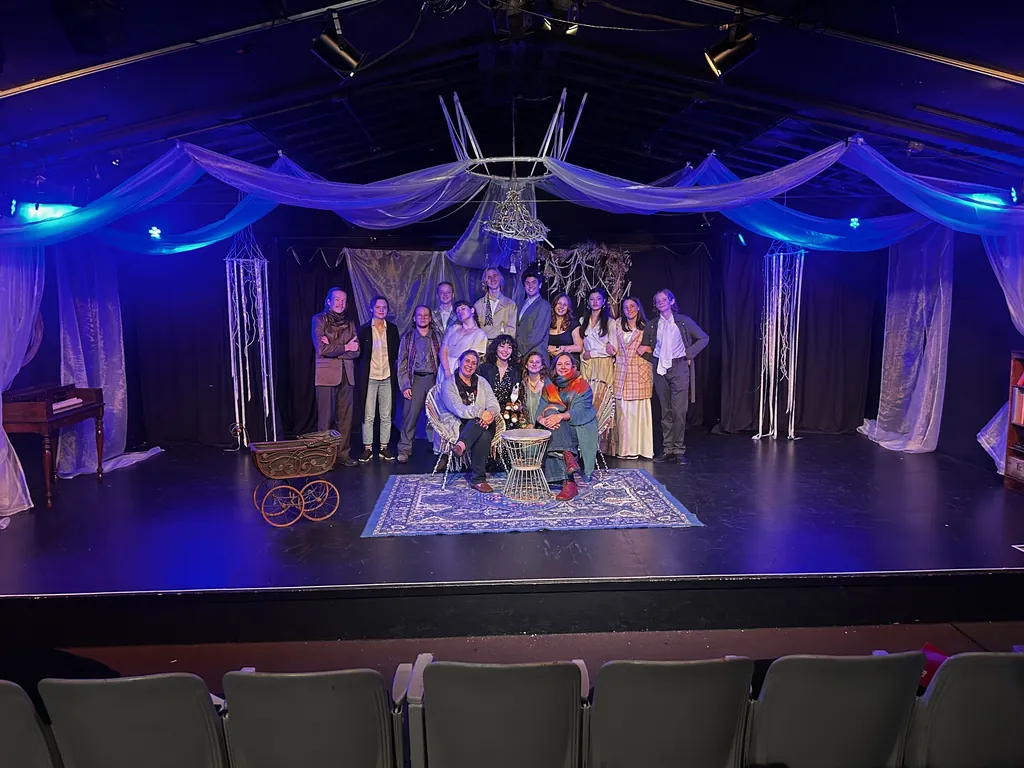
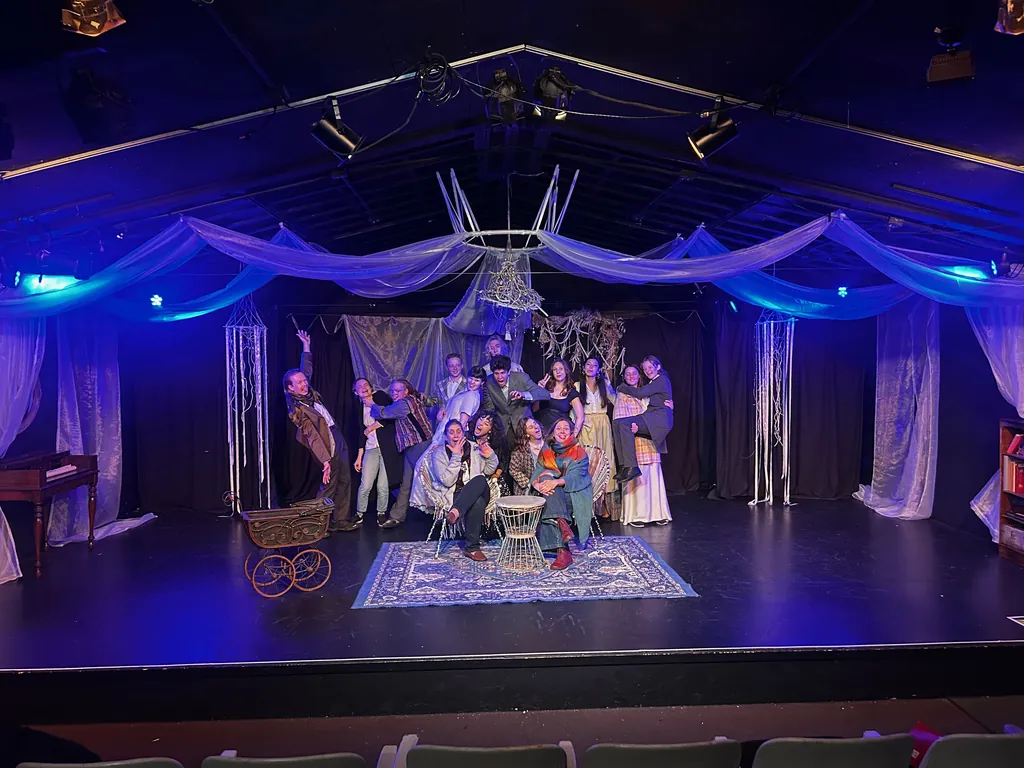
West Performing Arts Center, Santa Cruz, California
Working with a young ensemble, I developed a contemporary reimagining of Chekhov’s The Cherry Orchard, exploring urban transformation, displacement, and homelessness through the lens of a changing city.
Director / Scenic Designer
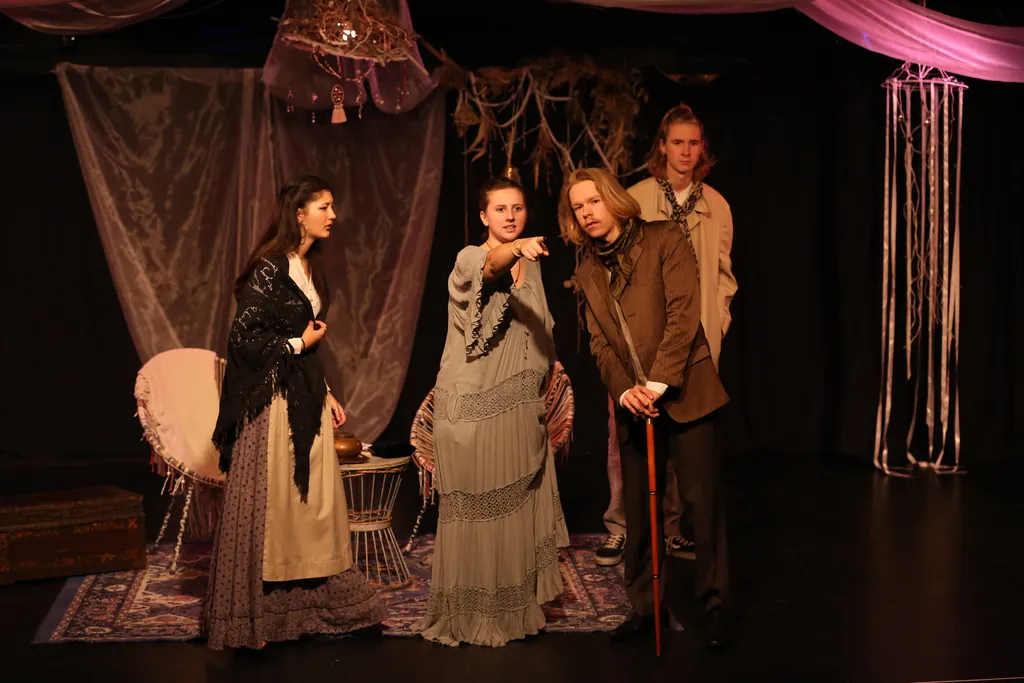
Right from the start, at our very first meeting with the cast, I wanted to put everyone at ease. I told them right away: pronouncing Russian names would not be a problem, and more importantly — we were not going to stage a play about Russia a hundred years ago.
Right from the start, at our very first meeting with the cast, I wanted to put everyone at ease. I told them right away: pronouncing Russian names would not be a problem, and more importantly — we were not going to stage a play about Russia a hundred years ago.
1
Because the questions raised in Chekhov’s work — how beauty, artistry, history, and human depth can quietly disappear under the pressure of progress and capitalism — are not distant or abstract. They exist here and now, in their own hometown of Santa Cruz, where the historical identity of the city has been steadily vanishing before our eyes.
This became the starting point of a shared artistic journey that grew into a beautiful production, sparked genuine curiosity toward Chekhov’s writing, and, what remains especially meaningful to me, created a living bridge between Russian and American cultures within the walls of West Performing Arts.
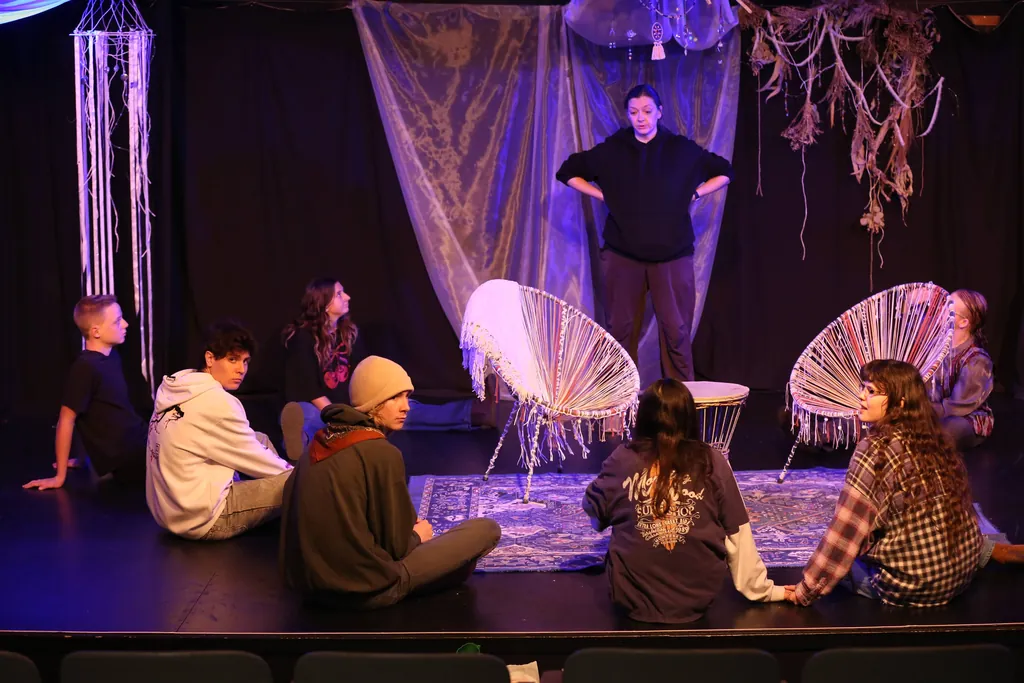
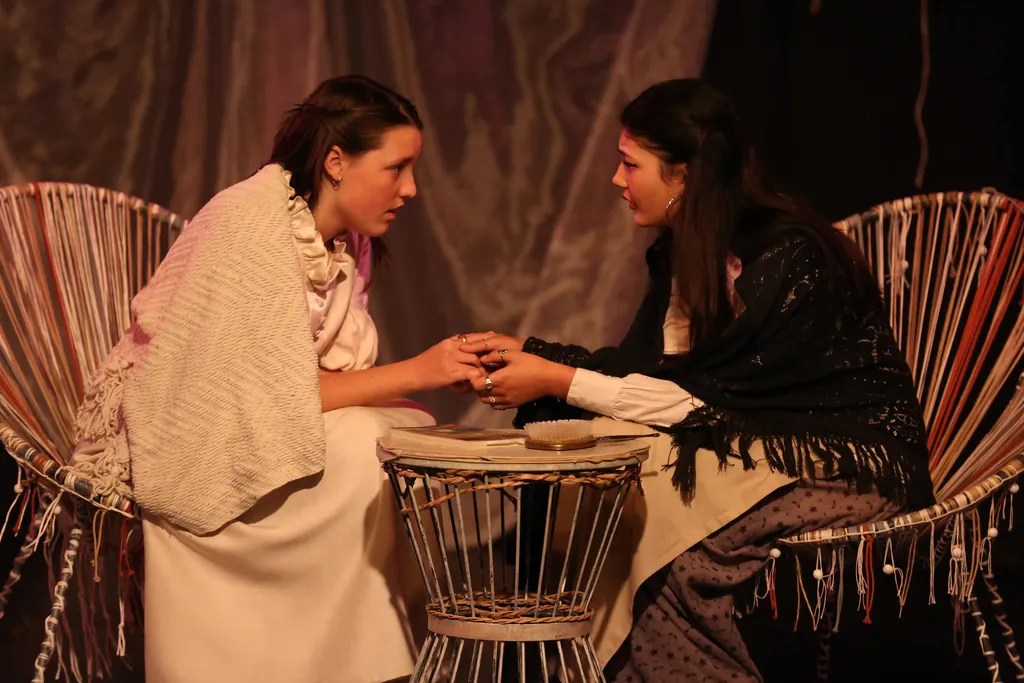
The rehearsal process became a constant movement between two parallel searches: discovering each character’s physicality — their rhythm, speed, movement, and voice — while also asking deeper questions: what drives them, and what personal story stands behind every character in the play.
Through physical improvisation and ensemble games, moments of humor began to emerge naturally. We found ourselves laughing to tears long before the audience eventually did.
Because of this, the traditional question often asked about The Cherry Orchard — “Why is this considered a comedy when everything feels so sad?” — disappeared for the actors almost immediately.
2
I was fortunate to work with an exceptionally close and supportive ensemble of actors. This became an essential part of the creative process, allowing us to build and deepen the relationships between the characters with honesty and freedom.
Because trust and genuine support already existed between the actors themselves, we were able to explore the emotional dynamics of the play in a much deeper and more authentic way.
3
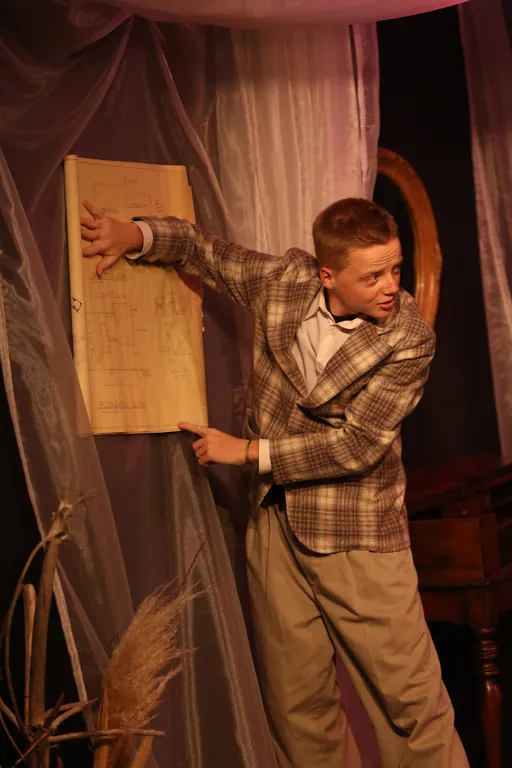
By exploring movement speed, behavioral patterns, and discussing the everyday routines of each character, we searched for the subtle differences that reveal their social status and place within the world of the play.
For me, it was important that these distinctions emerged not as external performance choices, but as something embodied — reflected naturally through the actors’ physical presence, habits, and interactions.
5,6
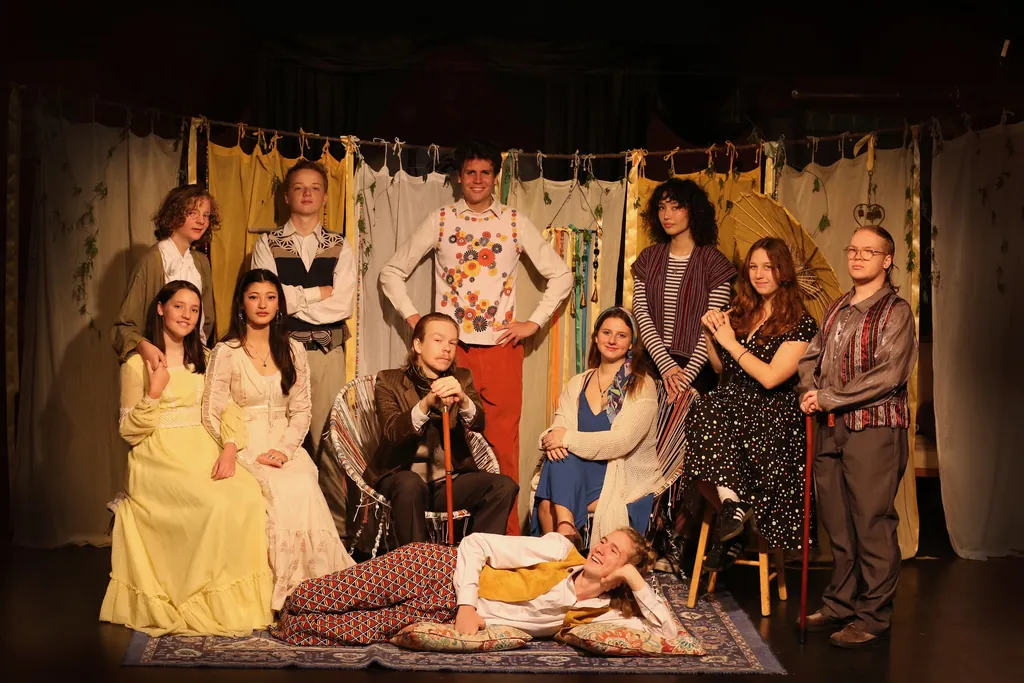
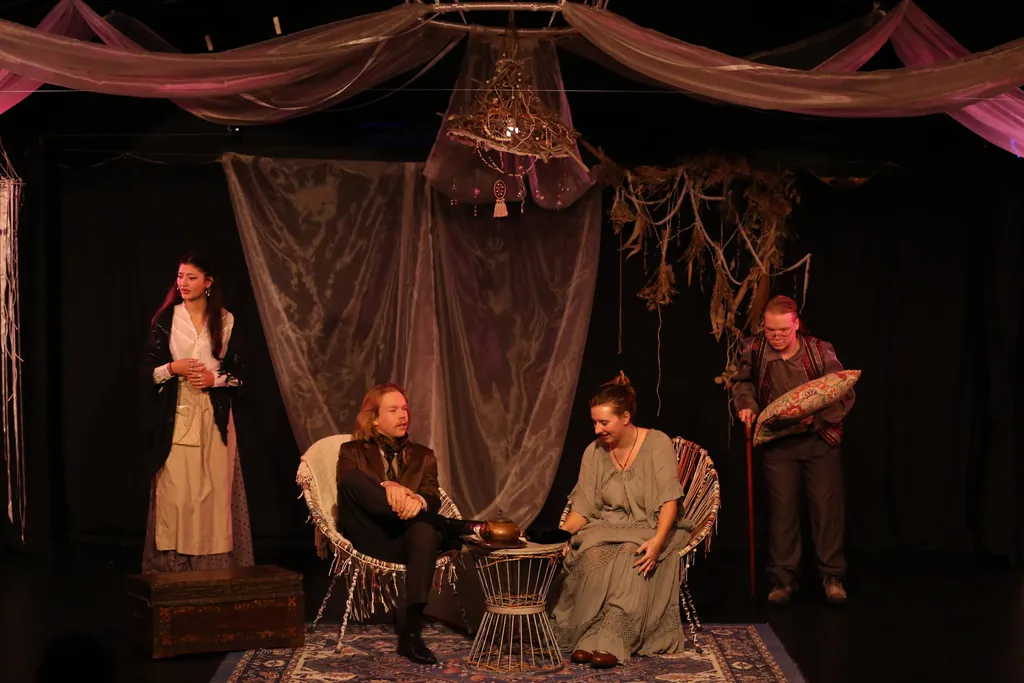
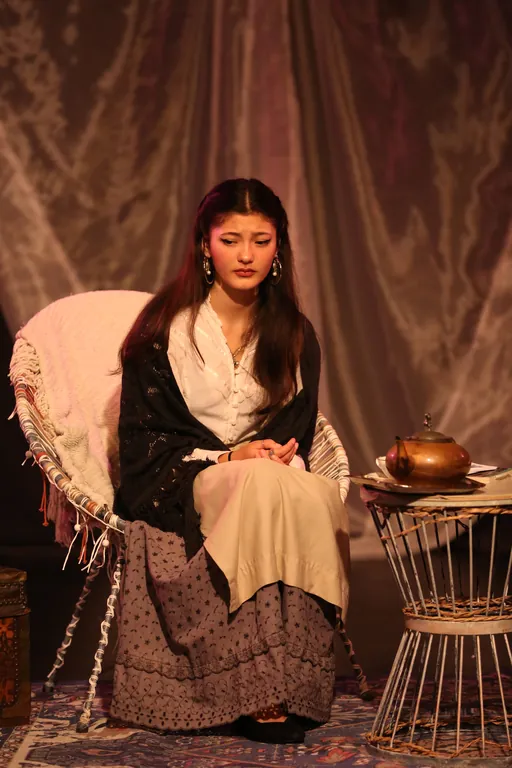
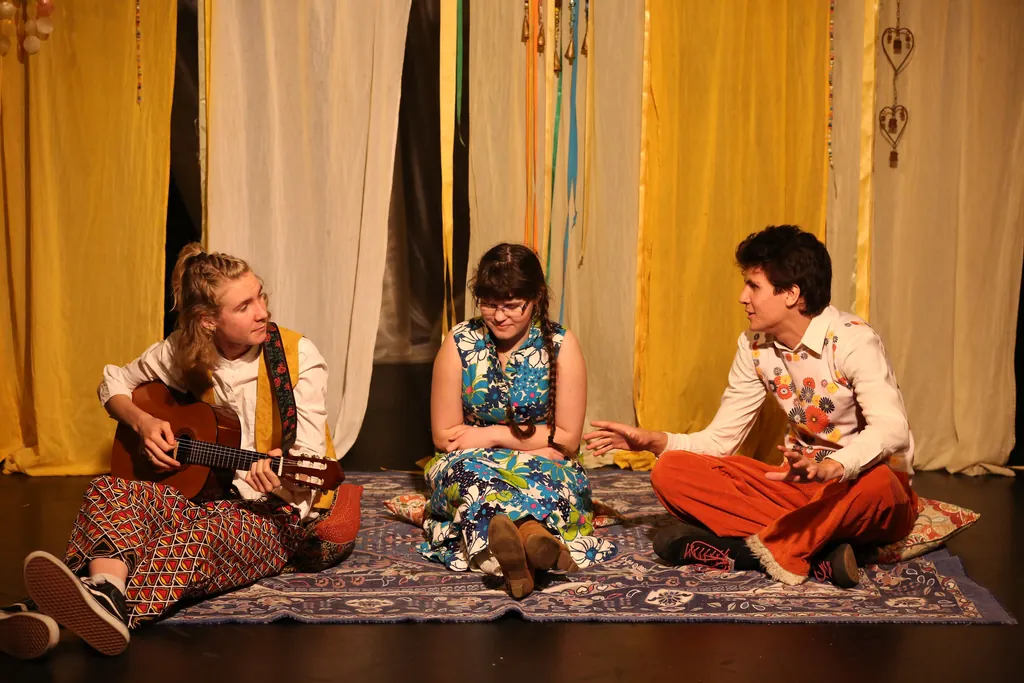
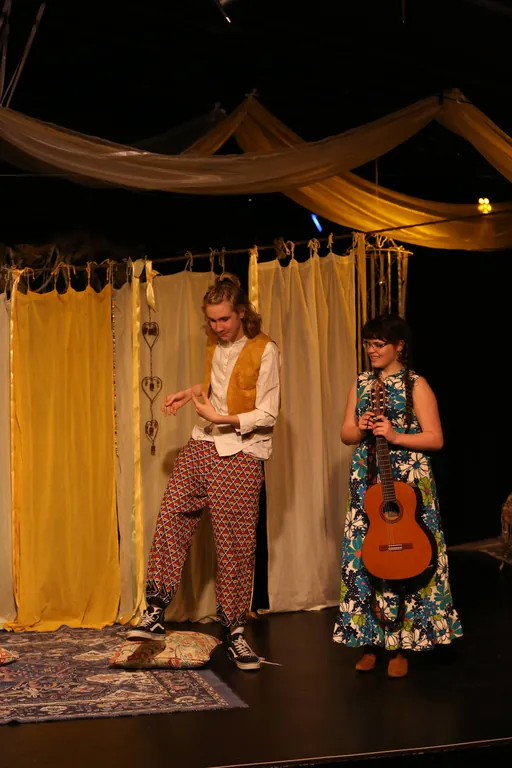
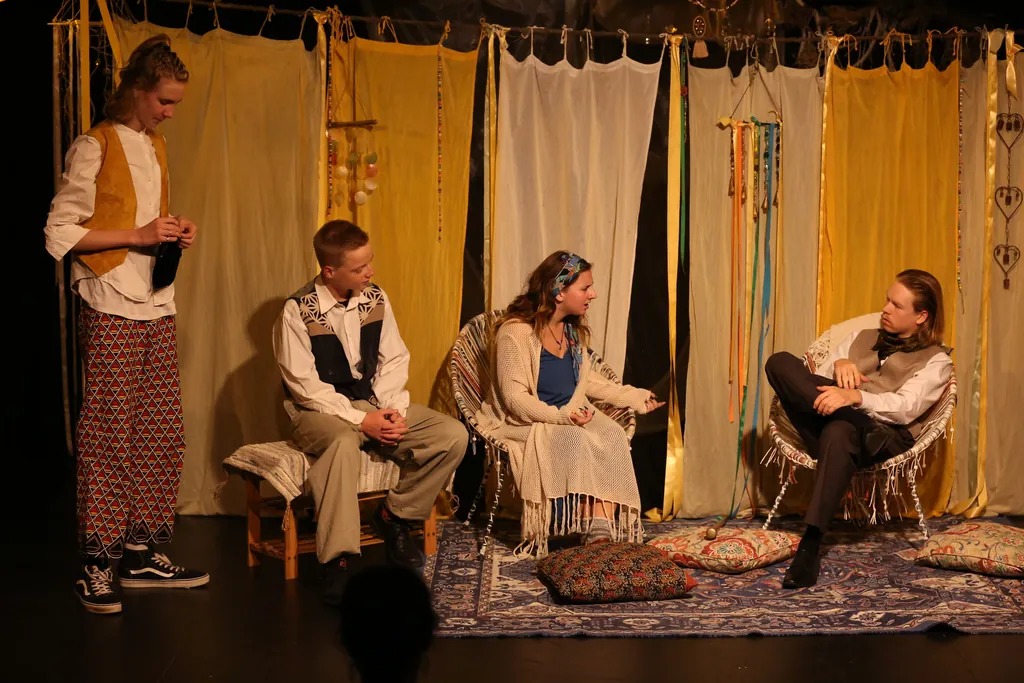
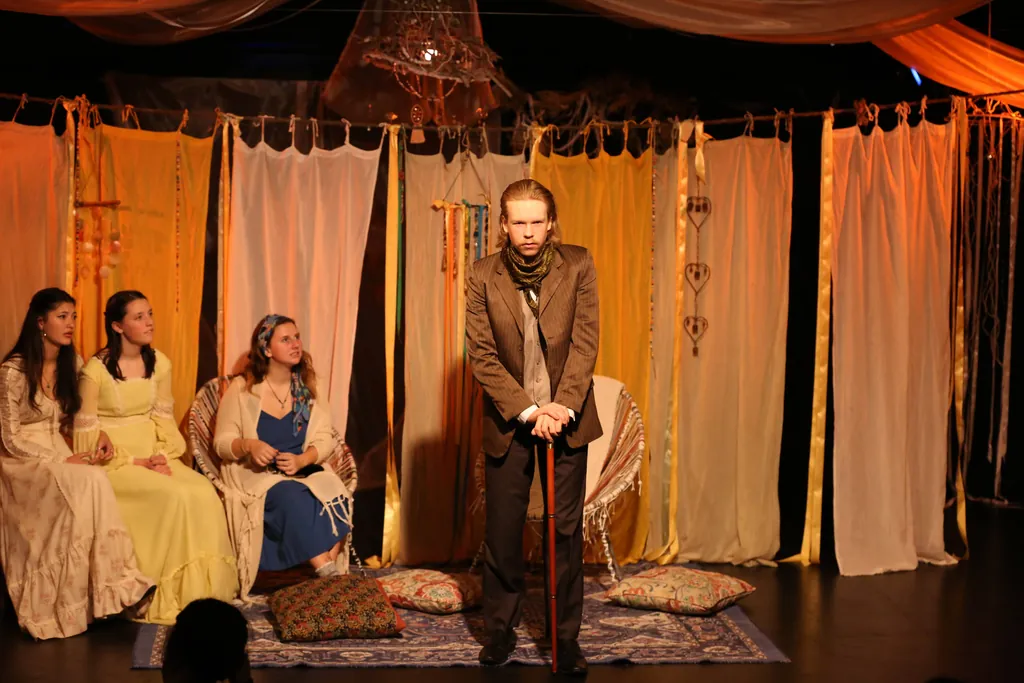
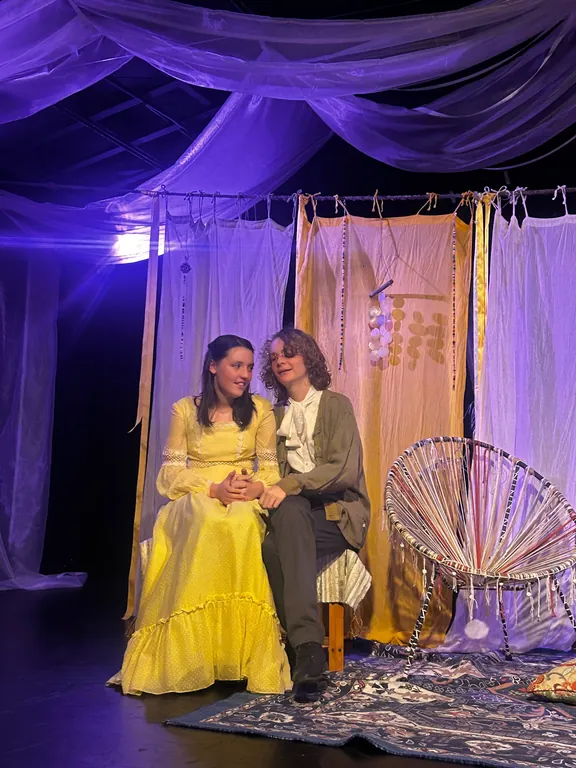
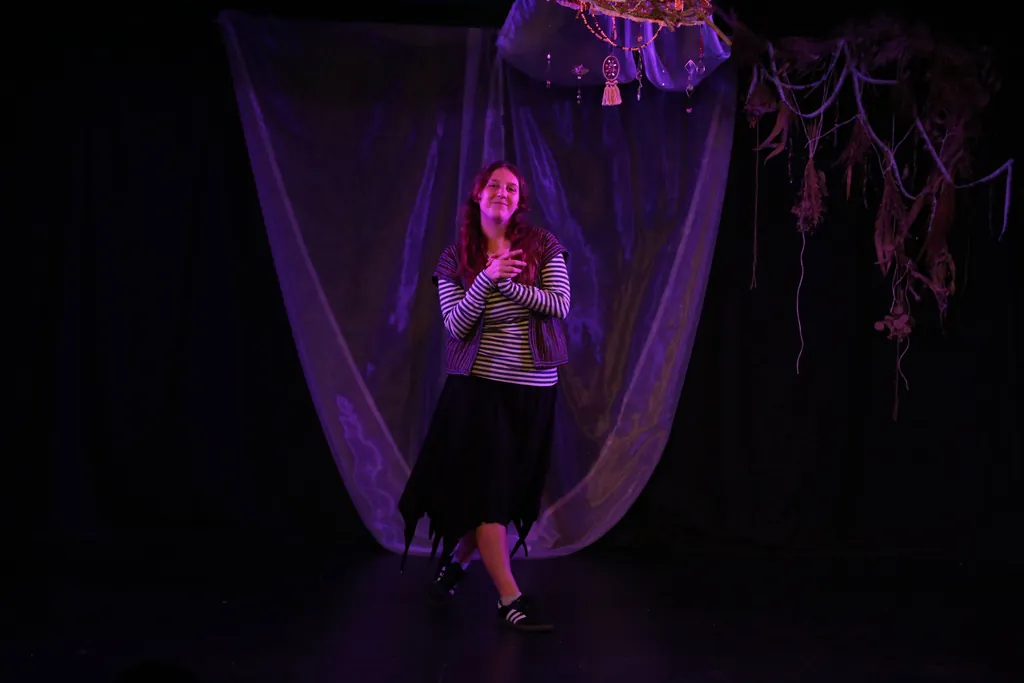
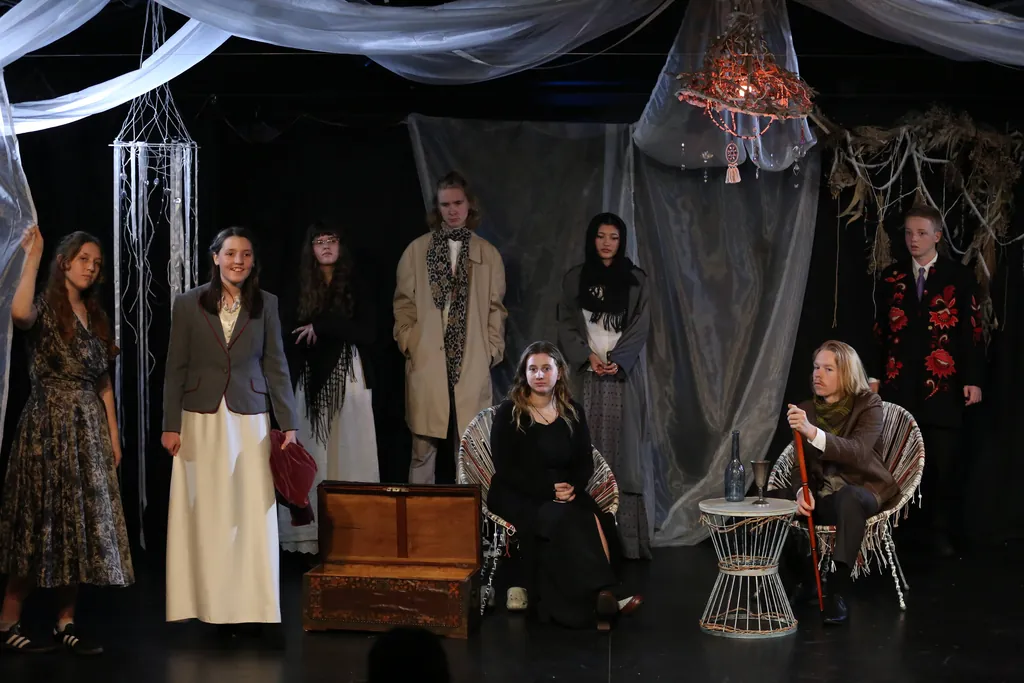
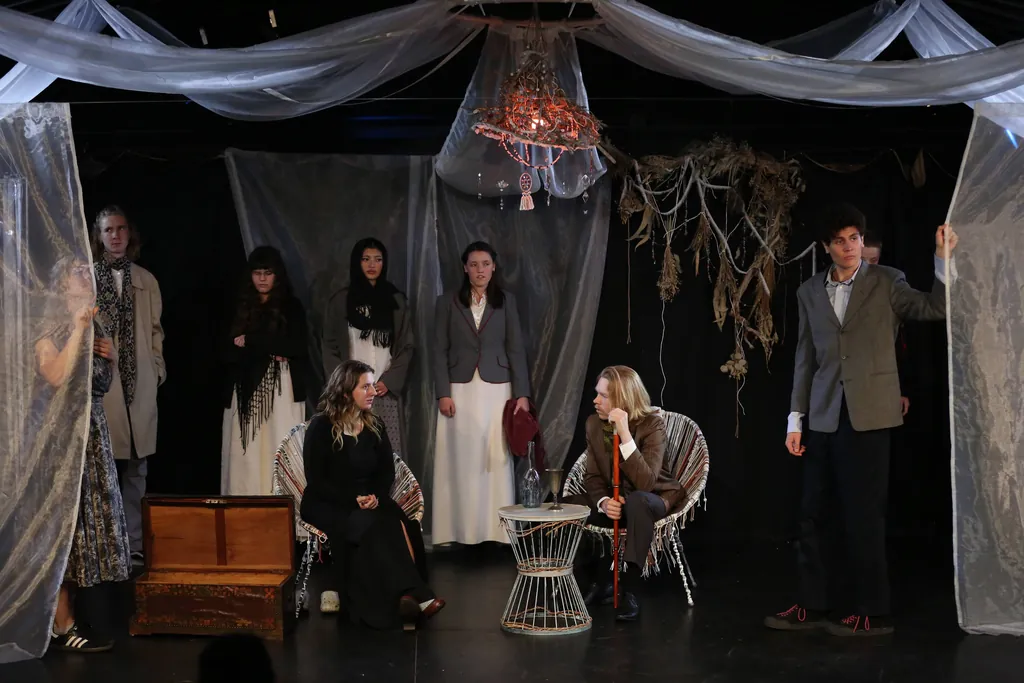
While working on the production not only as a director, but also as costume and set designer, I explored color palettes, textures, and visual composition as an essential part of storytelling.
I carefully played with the colors and materials of the costumes to reflect the shifting emotional atmosphere and changing dynamics throughout the four acts of the play — from Lyubov Ranevskaya’s arrival and the excitement of reunion, to intimate late-night conversations filled with memories, uncertainty, and the growing sense of inevitable change.
8,9,10,11,12
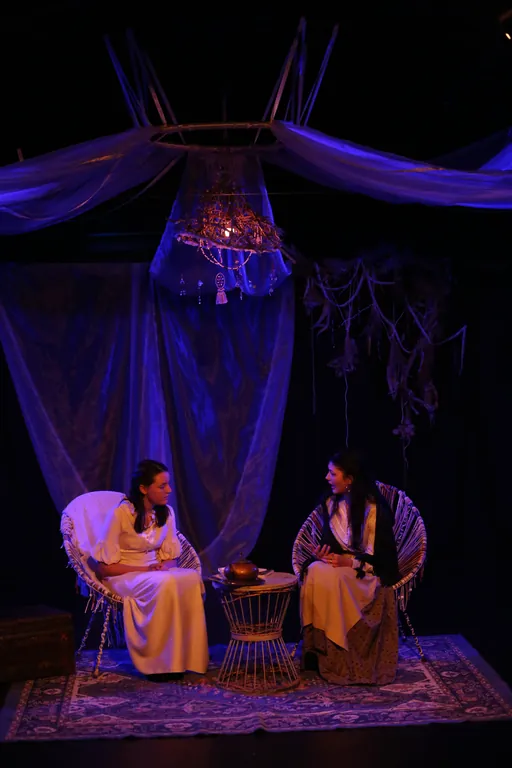
As the first act moves into the liminal space between night and morning, the stage reflects a fragile human connection suspended in time — a moment where everyone speaks, yet no one is truly heard.
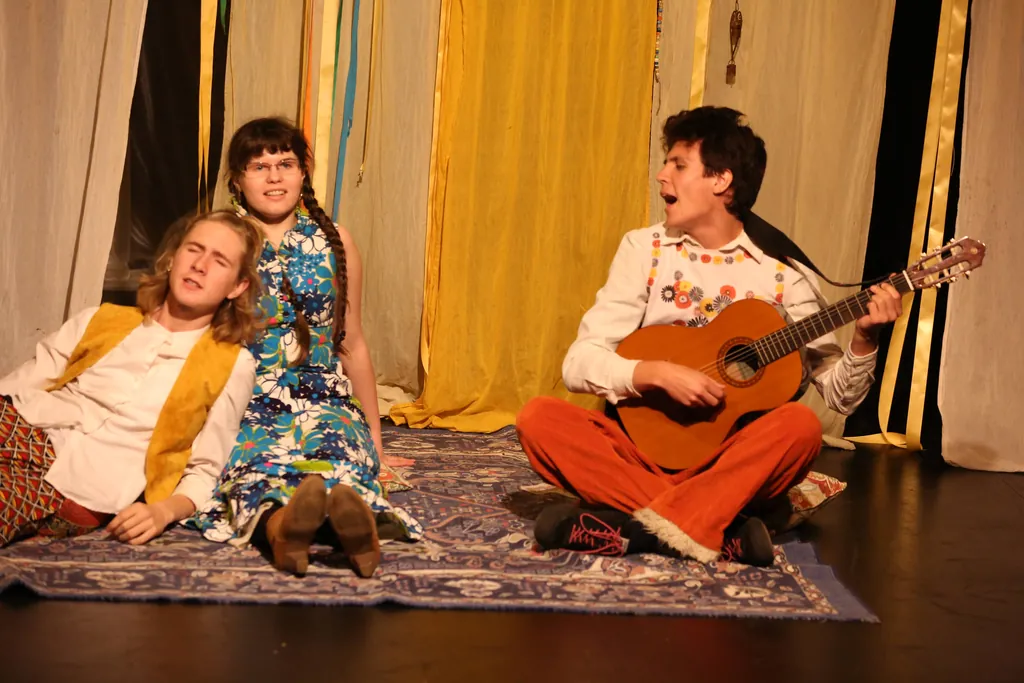
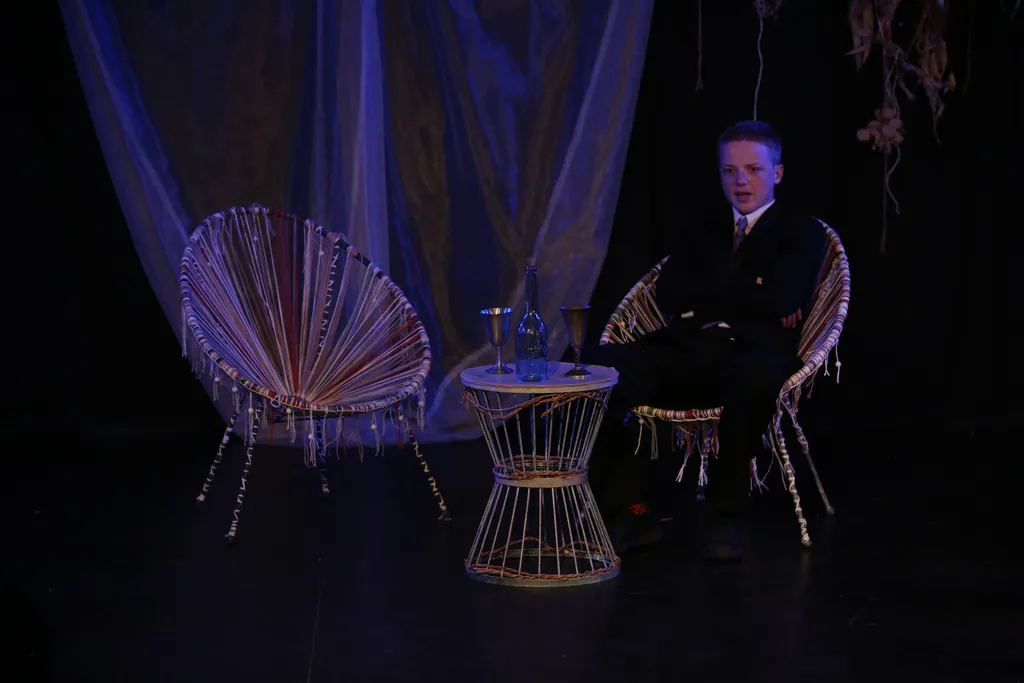
As the song Heart of Gold fills the space, the second act begins with a playful transformation of the set itself. Dancing as they move the scenery, the actors turn the transition into part of the performance, while colorful faded fabrics, ribbons, bells, and flowers create a tribute to the spirit of the hippie era — a nostalgic world of love, freedom, music, and a generation longing for change.
As the song Heart of Gold fills the space, the second act begins with a playful transformation of the set itself. Dancing as they move the scenery, the actors turn the transition into part of the performance, while colorful faded fabrics, ribbons, bells, and flowers create a tribute to the spirit of the hippie era — a nostalgic world of love, freedom, music, and a generation longing for change.
14
Immersed in the slow rhythm of summer heat — wind, insects, and afternoon stillness — the characters imagine the future with ease and certainty, while the foundations of their world quietly begin to disappear beneath them.
Immersed in the slow rhythm of summer heat — wind, insects, and afternoon stillness — the characters imagine the future with ease and certainty, while the foundations of their world quietly begin to disappear beneath them.
15,16,18
Dried flowers become part of the visual landscape, symbolizing something once beautiful, fragile, and alive, now quietly transformed into the past before our eyes. Only the faint lingering scent of a bloom long since faded remains in the air — a delicate reminder of a life that was once vibrant, radiant, and full of color.
Dried flowers become part of the visual landscape, symbolizing something once beautiful, fragile, and alive, now quietly transformed into the past before our eyes. Only the faint lingering scent of a bloom long since faded remains in the air — a delicate reminder of a life that was once vibrant, radiant, and full of color.
19
Lost in comfort, passivity, and their unwillingness to confront reality, the characters are abruptly awakened by a violent sensory rupture — the screech of distortion, the sound of a breaking string, and an explosion of light — immediately following Petya’s reflection that conversations about suffering too often become a convenient way of ignoring those who actually suffer.
Lost in comfort, passivity, and their unwillingness to confront reality, the characters are abruptly awakened by a violent sensory rupture — the screech of distortion, the sound of a breaking string, and an explosion of light — immediately following Petya’s reflection that conversations about suffering too often become a convenient way of ignoring those who actually suffer.
70
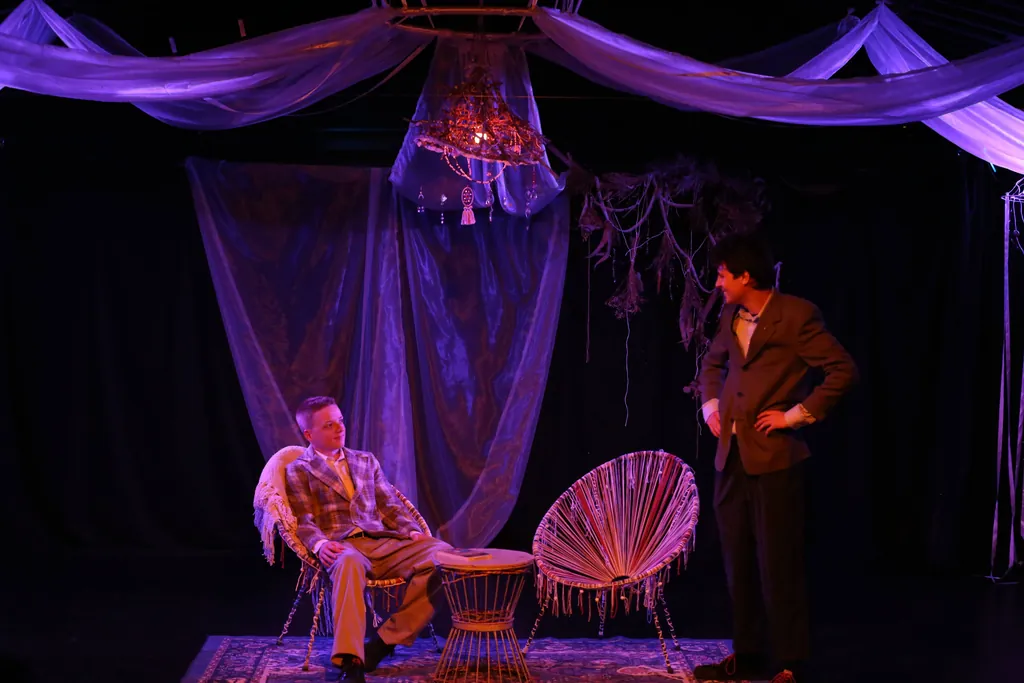
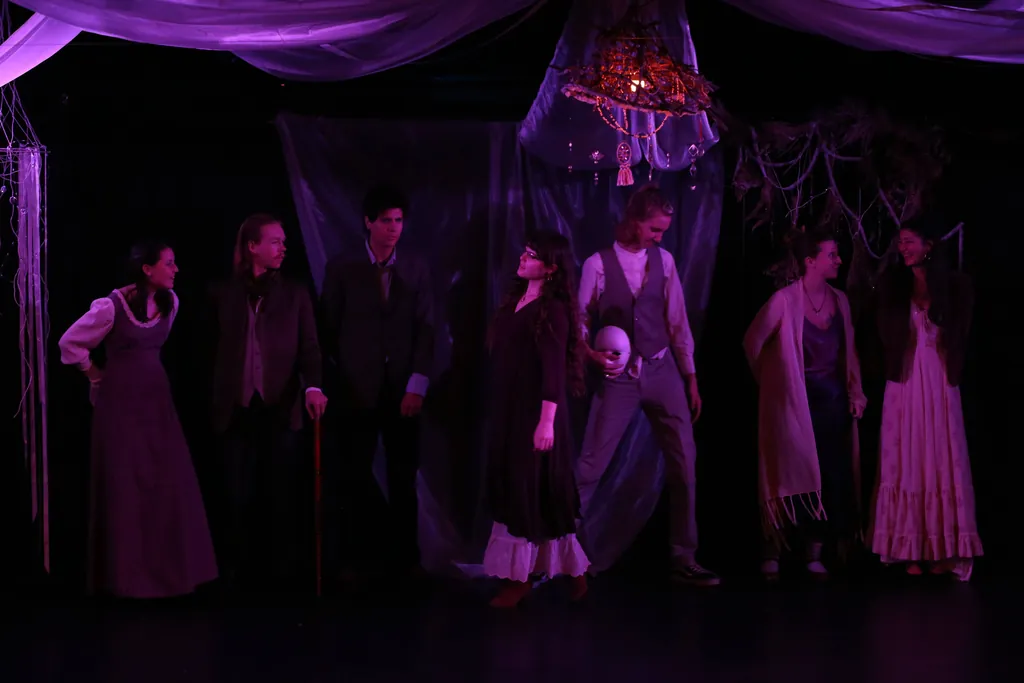
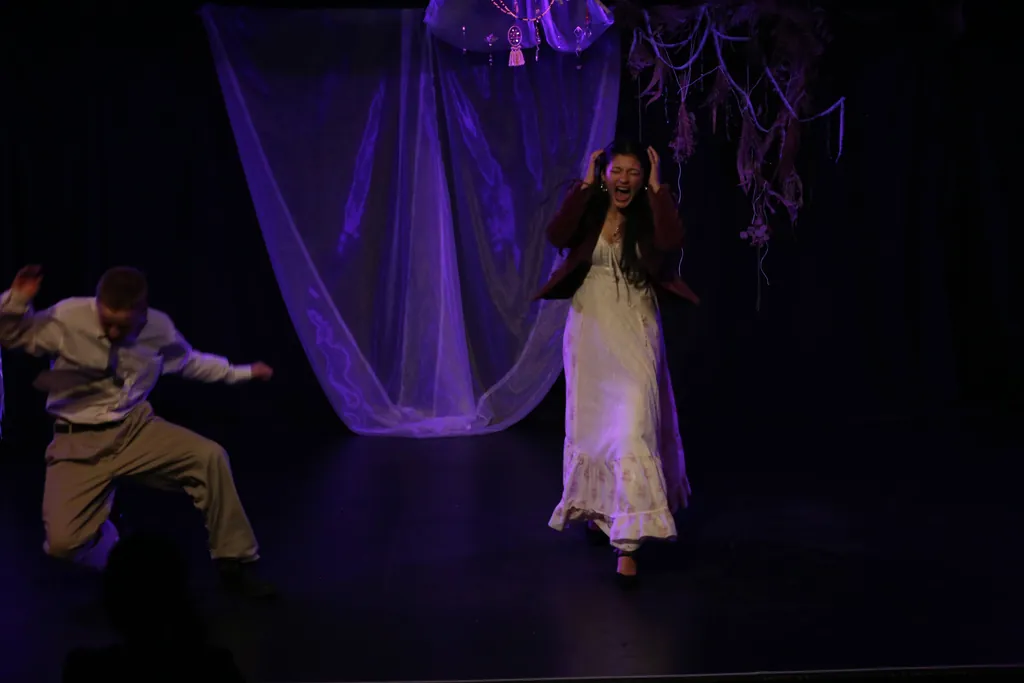
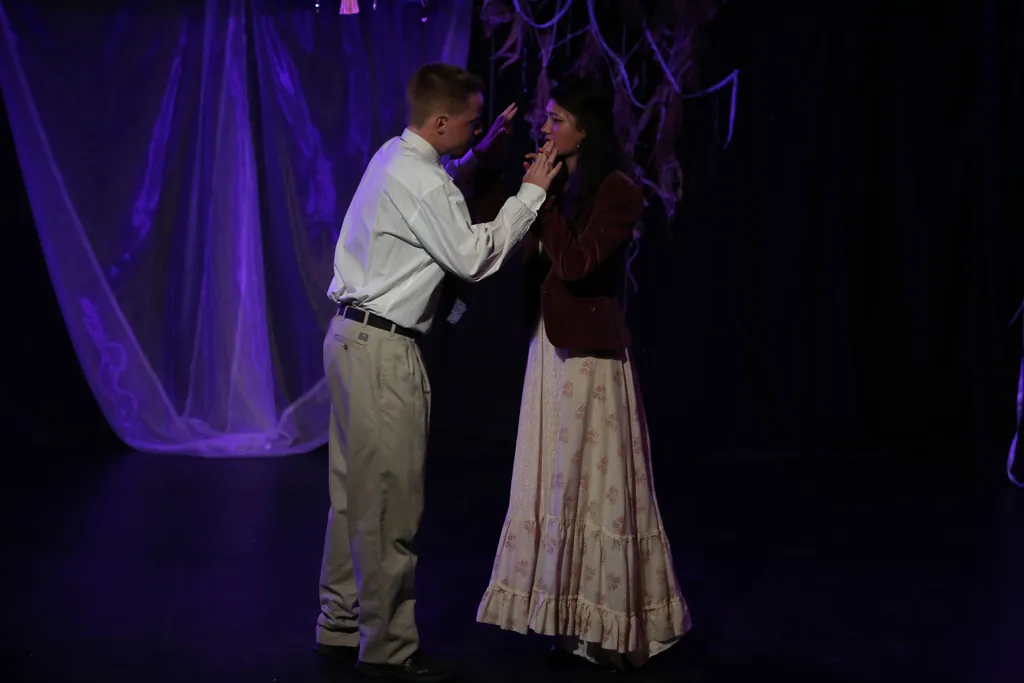
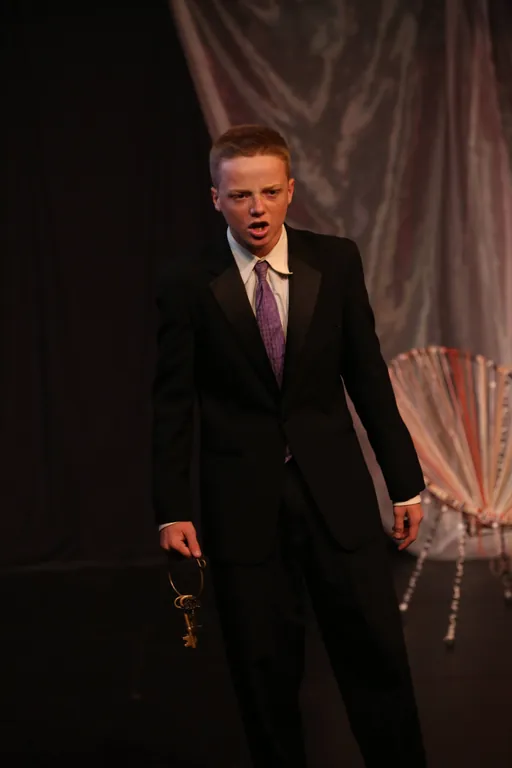
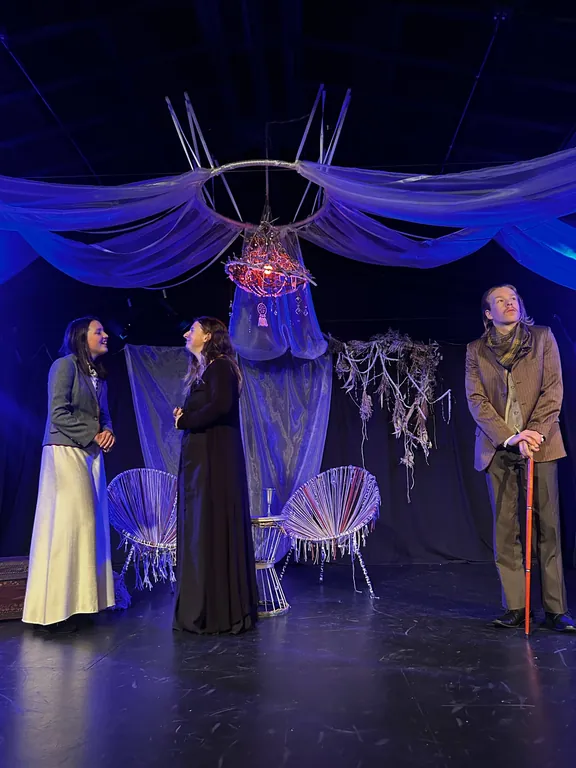
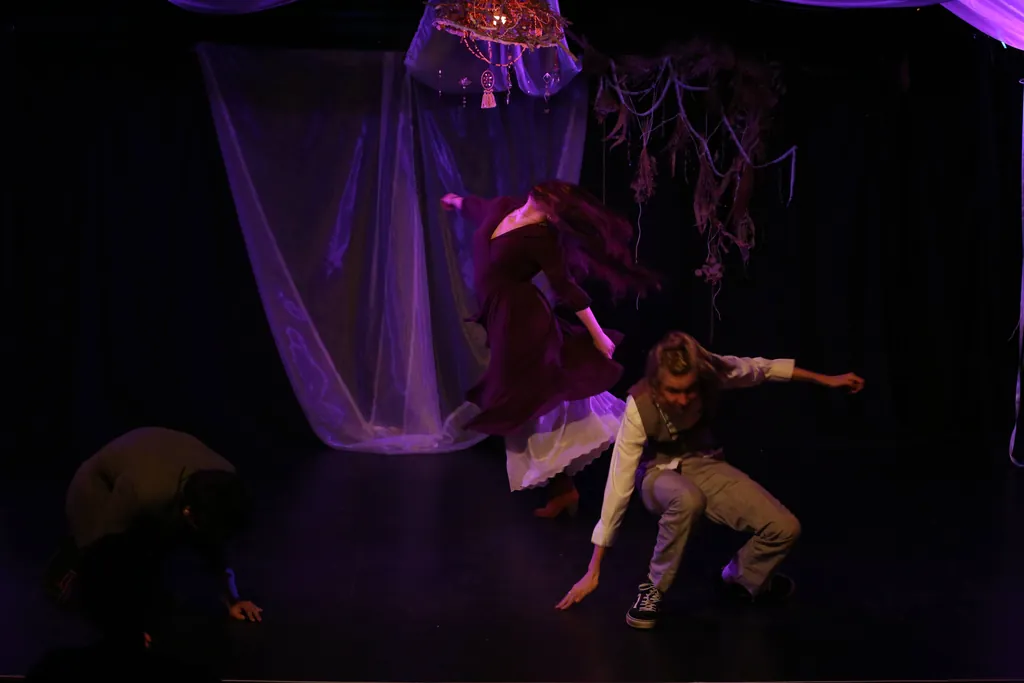
The visual language of the third act moves toward colder territory. Purple begins to take over the stage through light and costume, while soft domestic elements — rugs, blankets, pillows — are removed, transforming the space into something more exposed, distant, and emotionally fragile.
The visual language of the third act moves toward colder territory. Purple begins to take over the stage through light and costume, while soft domestic elements — rugs, blankets, pillows — are removed, transforming the space into something more exposed, distant, and emotionally fragile.
25,26
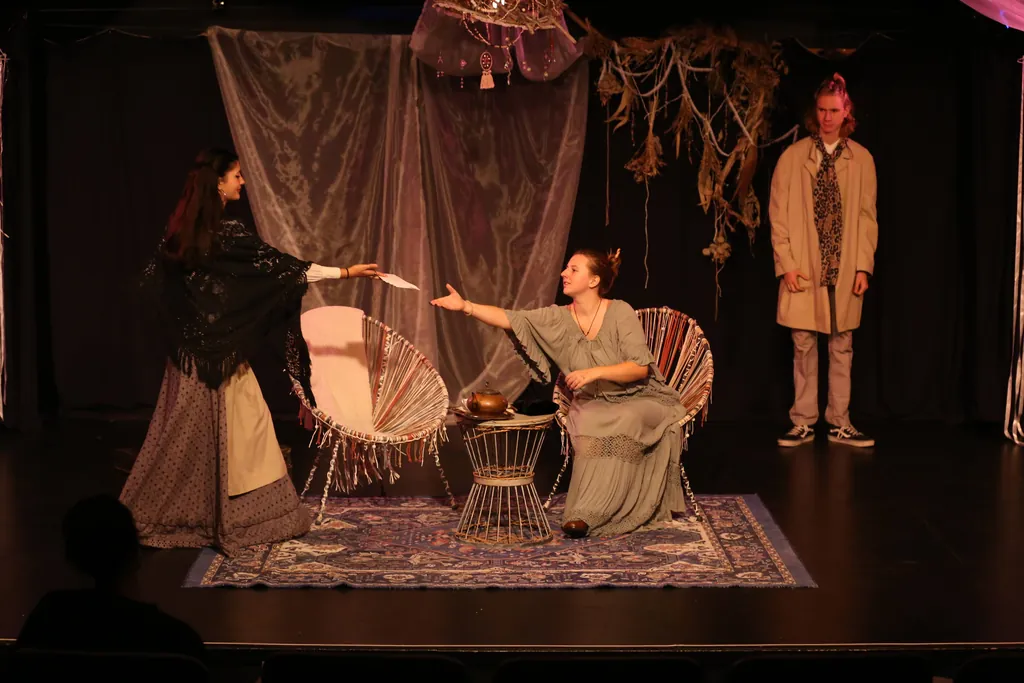
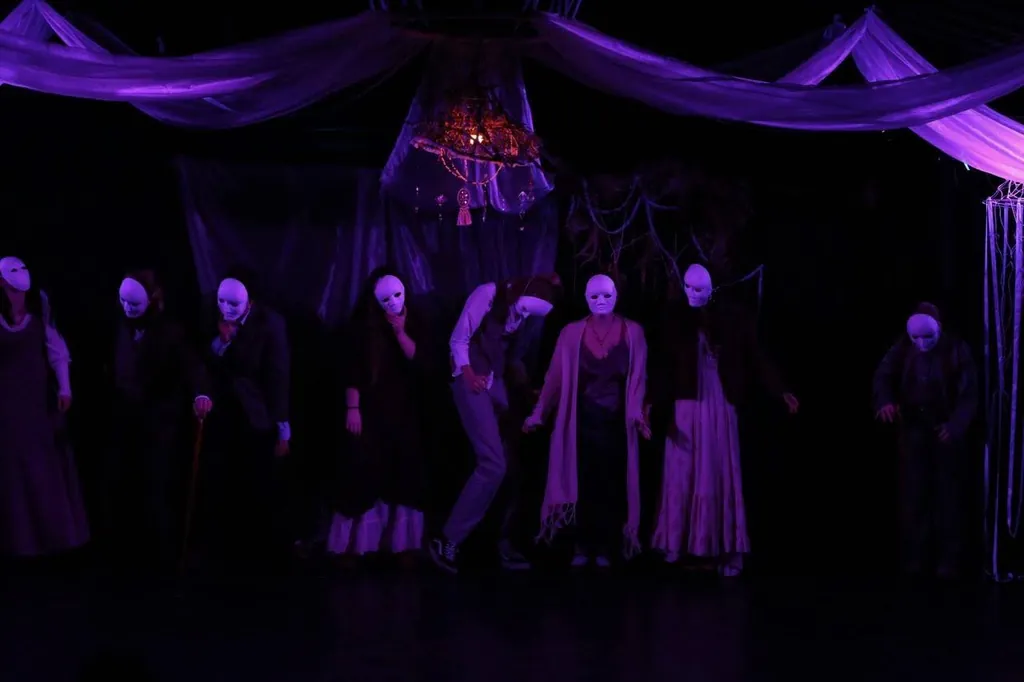
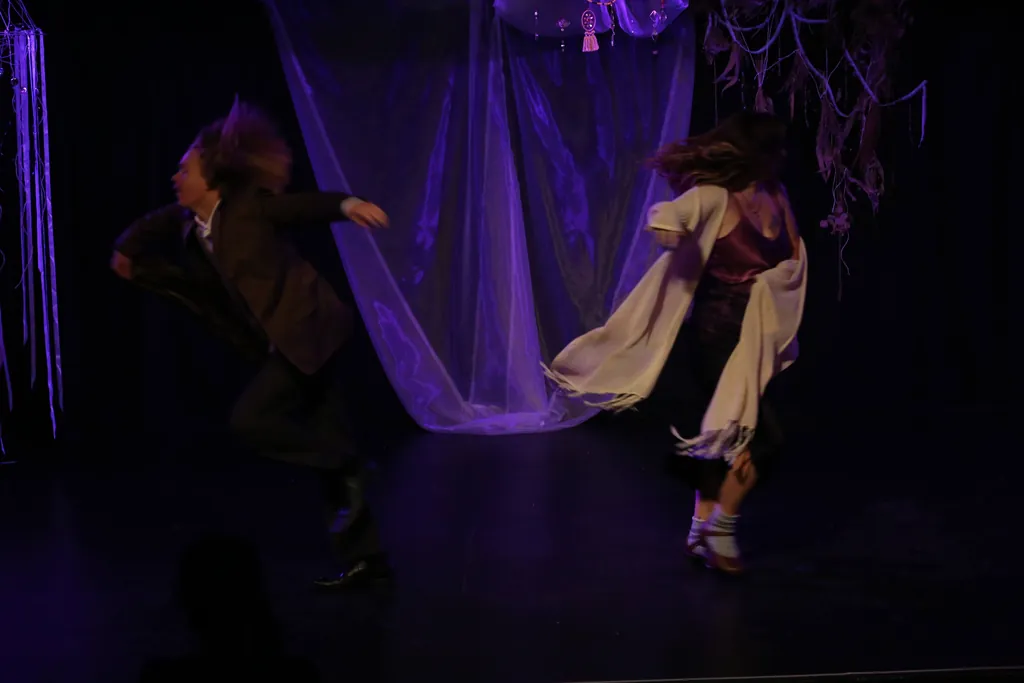
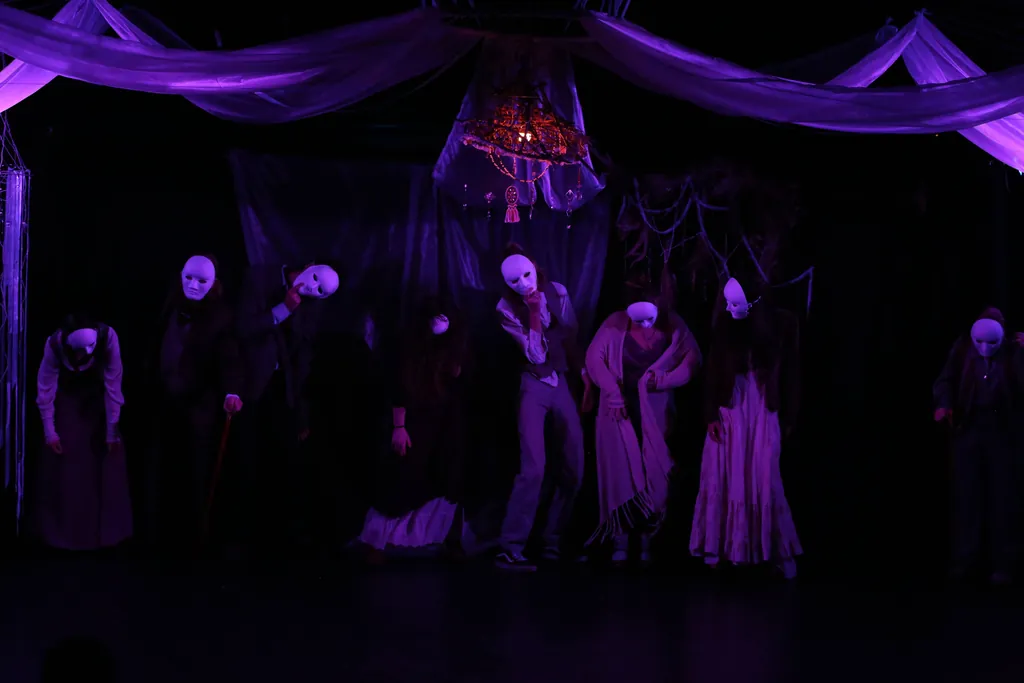
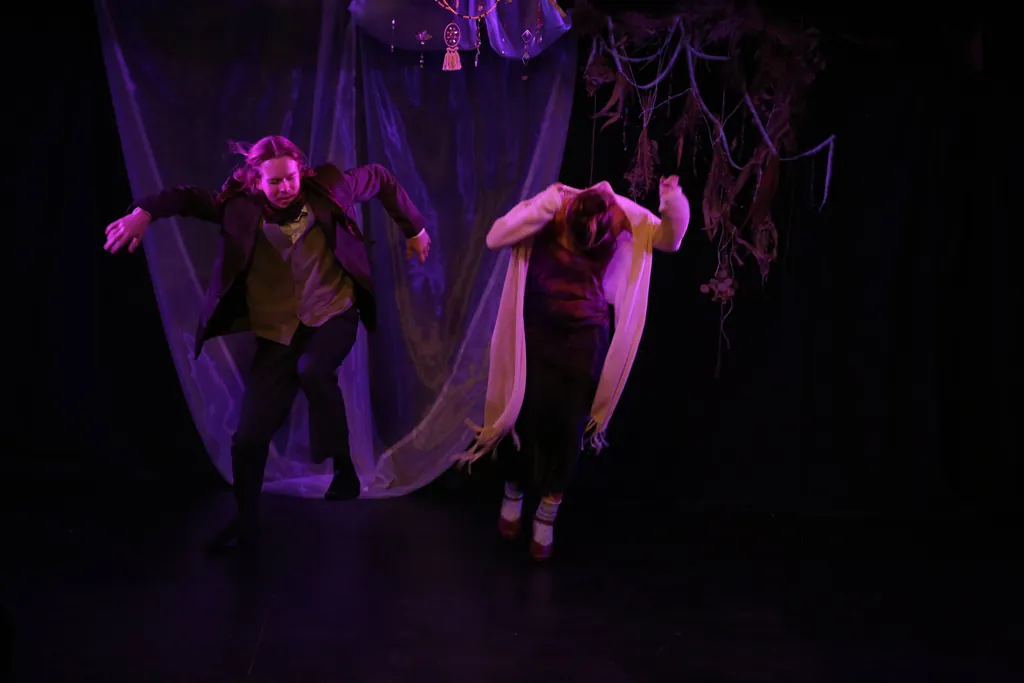
During Charlotte’s trick, the stage shifts into a physical theatre composition in which the characters become marionettes manipulated by her unseen force, exposing emotions and desires usually hidden beneath social performance.
During Charlotte’s trick, the stage shifts into a physical theatre composition in which the characters become marionettes manipulated by her unseen force, exposing emotions and desires usually hidden beneath social performance.
27
Accompanied by Marilyn Manson’s The Dope Show, the sequence reveals the private fears, suppressed tensions, and fragile connections binding the characters together.
Stripped of language, the scene becomes pure physical expression — spontaneous movement, impulsive gestures, and bodies speaking truths words are unable to contain.
33,34,36,71,72,75
The party resumes as the characters awkwardly attempt to return to familiar rituals, despite knowing that, somewhere beyond the house, the auction deciding both the fate of the estate and their entire world is already underway.
The absurdity of continuing this celebration no longer escapes anyone present.
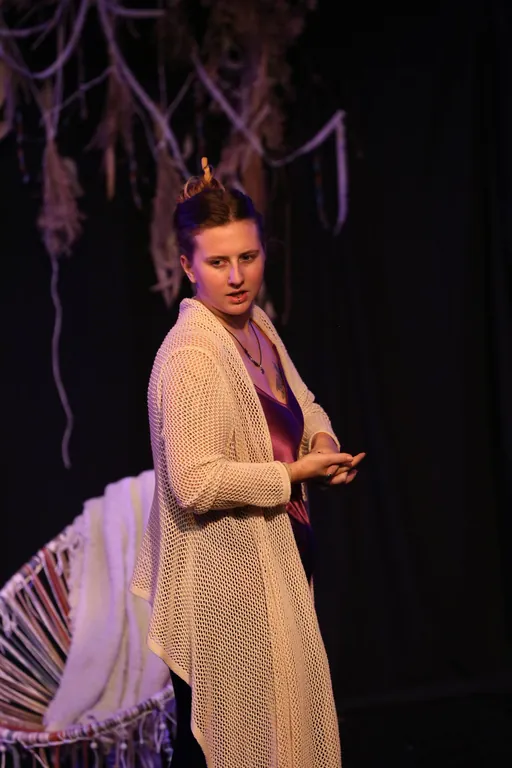
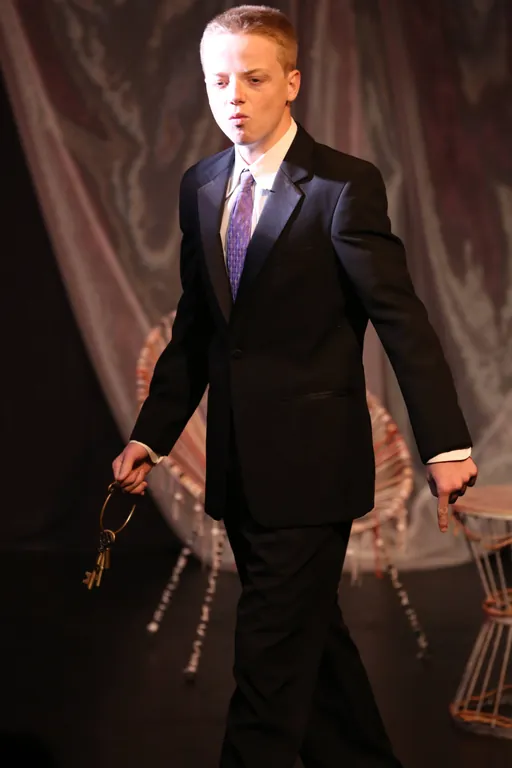
It was important for me to reimagine Charlotte, perhaps the most enigmatic character of the play, who first appears as an absurd outsider, almost a comic eccentric, but gradually reveals herself as something much greater — a voice echoing Chekhov himself.
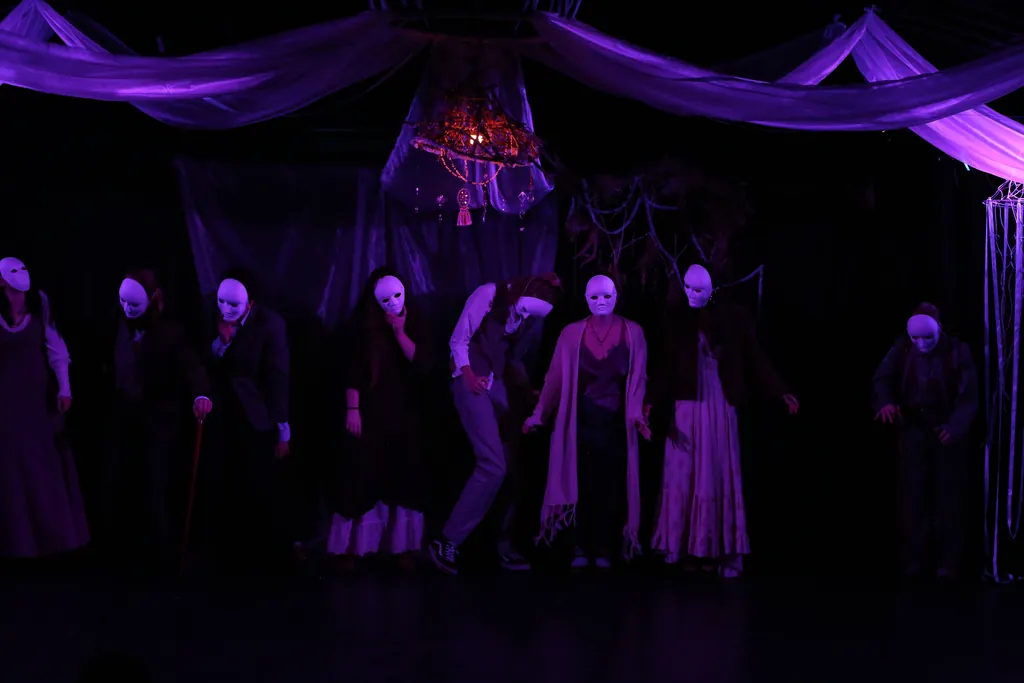
Instead of merely entertaining the others with tricks, Charlotte performs the most essential act of all: stripping away their masks and orchestrating the spectacle, forcing each character to reveal what has long been hidden beneath appearances.
37
Amid this absurd celebration, Varya stands apart as the last person still trying to hold the estate together, carrying alone the weight of a world already falling apart.
Amid this absurd celebration, Varya stands apart as the last person still trying to hold the estate together, carrying alone the weight of a world already falling apart.
39,40,41
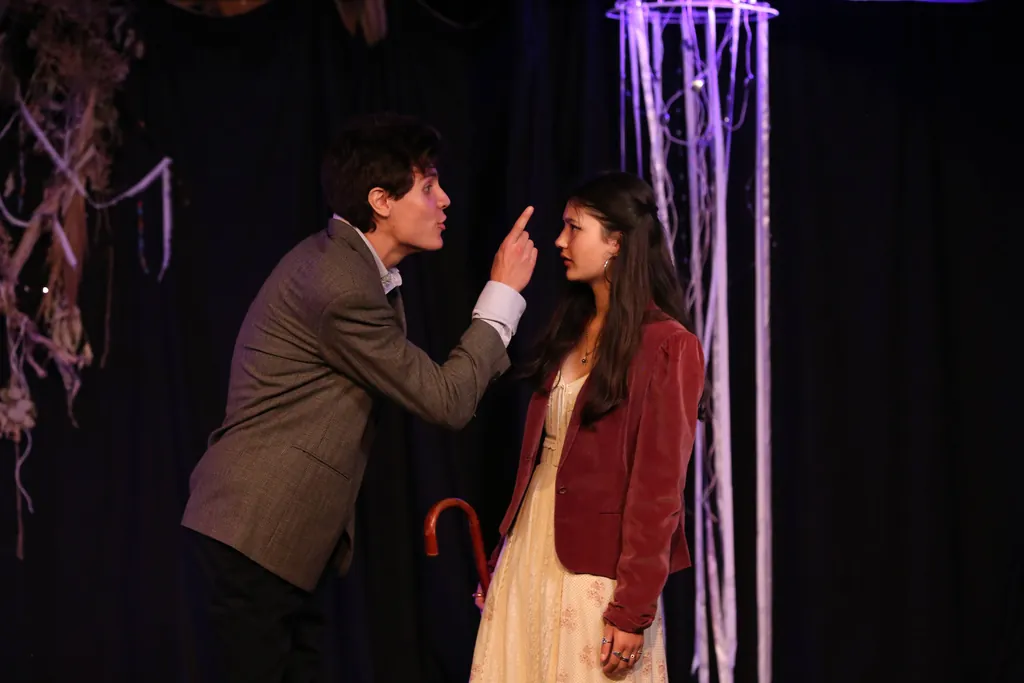
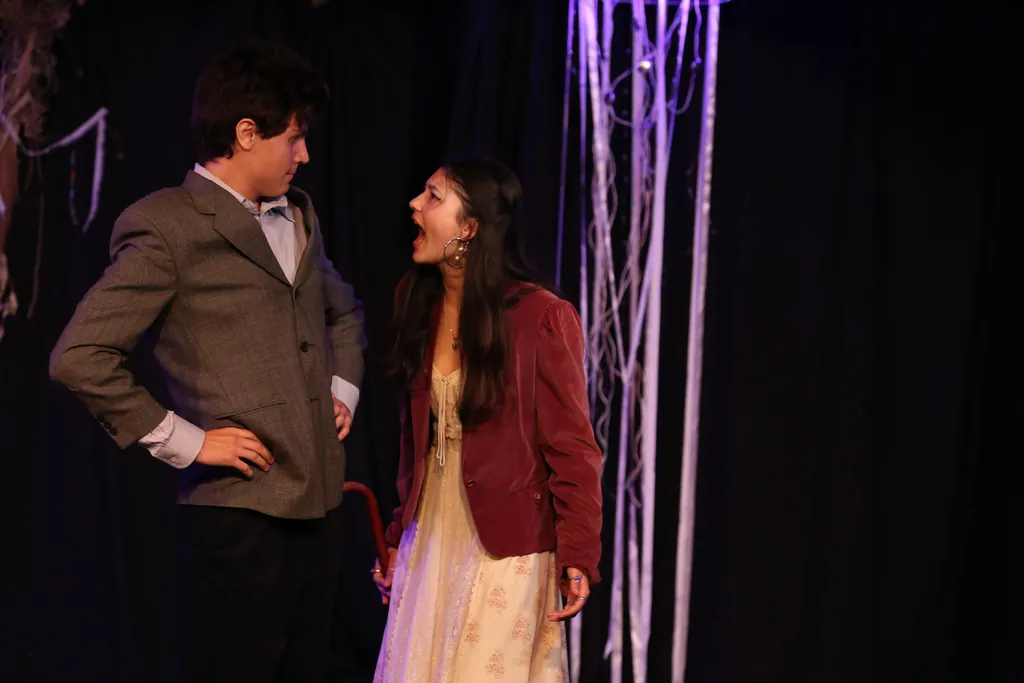
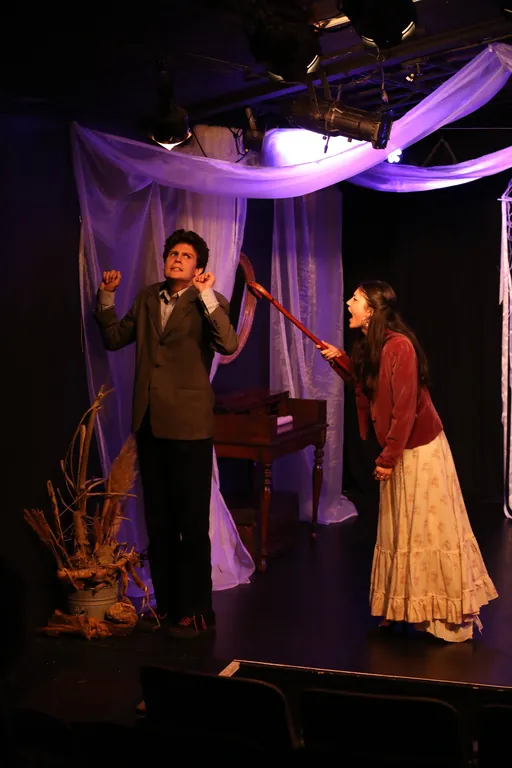
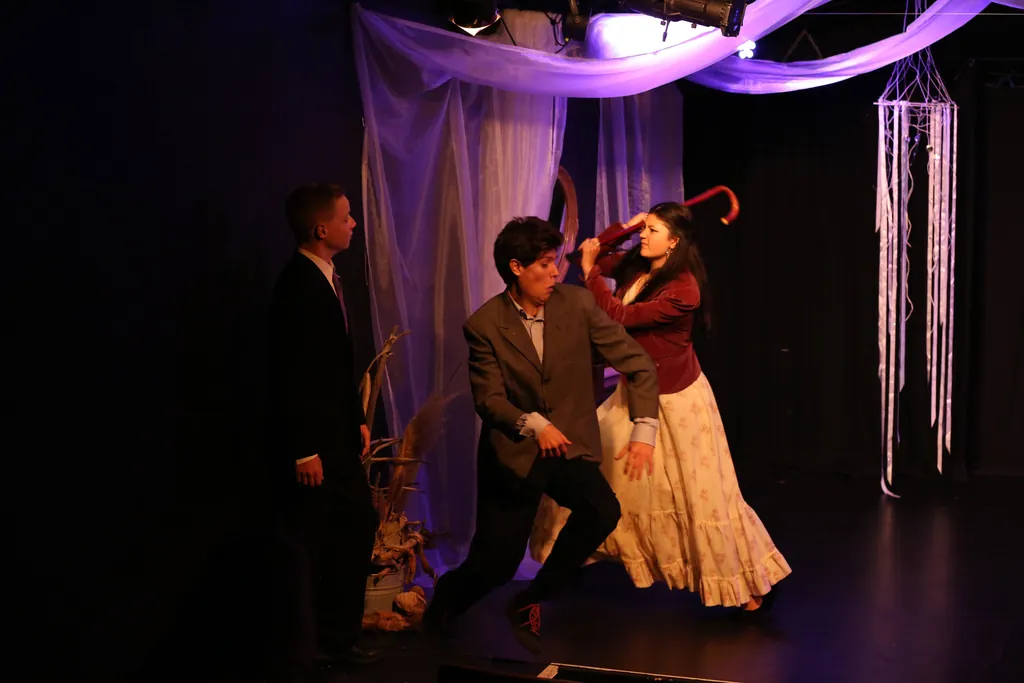
Her anger turns toward Yepikhodov, whose presence in the house brings only disorder instead of help.
Their chaotic exchange unexpectedly ends with Lopakhin being hit on the head by a cane — a moment that quietly closes a symbolic circle.
As a child, Lopakhin once found refuge in this house after being beaten by his father, arriving as the son of a servant. Now he enters as the owner, yet receives the same blow once again — a reminder that changing status does not always free us from the forces that shaped us.
76
Red light gradually overtakes the purple tones, signaling the arrival of a new force — power and destruction, the very energy Lopakhin now brings to the orchard.
Red light gradually overtakes the purple tones, signaling the arrival of a new force — power and destruction, the very energy Lopakhin now brings to the orchard.
43
Still overwhelmed by shock and exhilaration, he bursts into the room and pours the news over the inhabitants of the estate in one unstoppable torrent, unable to contain the force of what has just happened.
Still overwhelmed by shock and exhilaration, he bursts into the room and pours the news over the inhabitants of the estate in one unstoppable torrent, unable to contain the force of what has just happened.
44
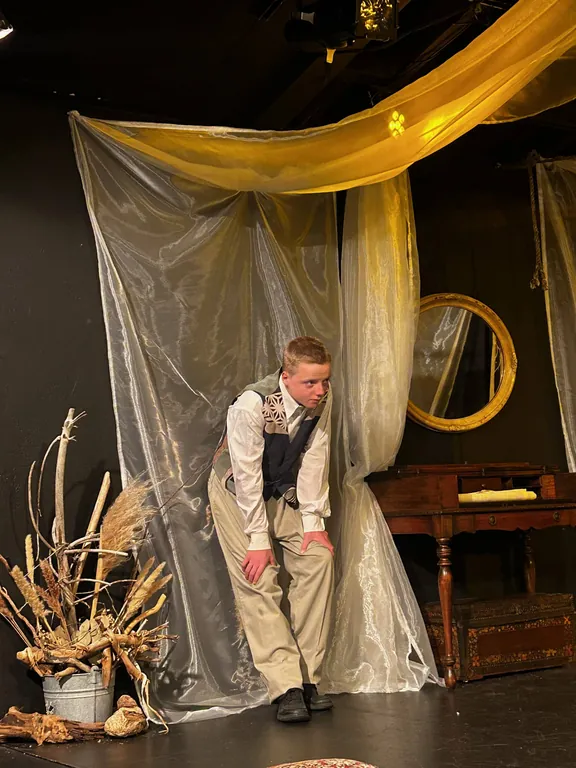
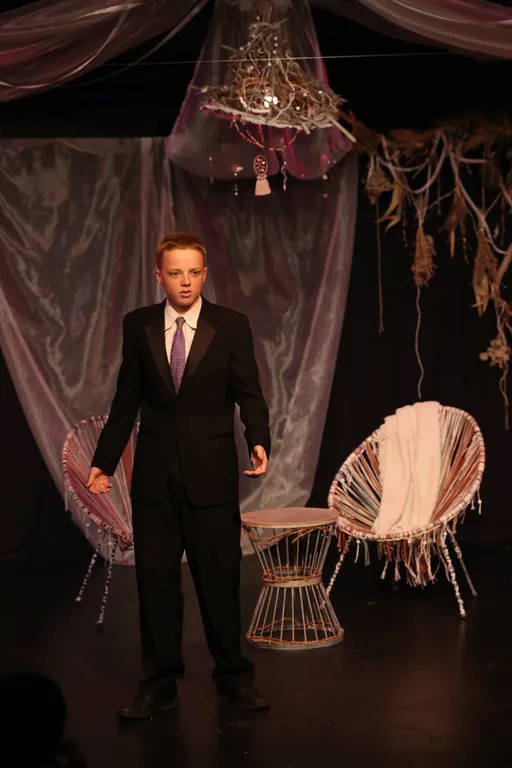
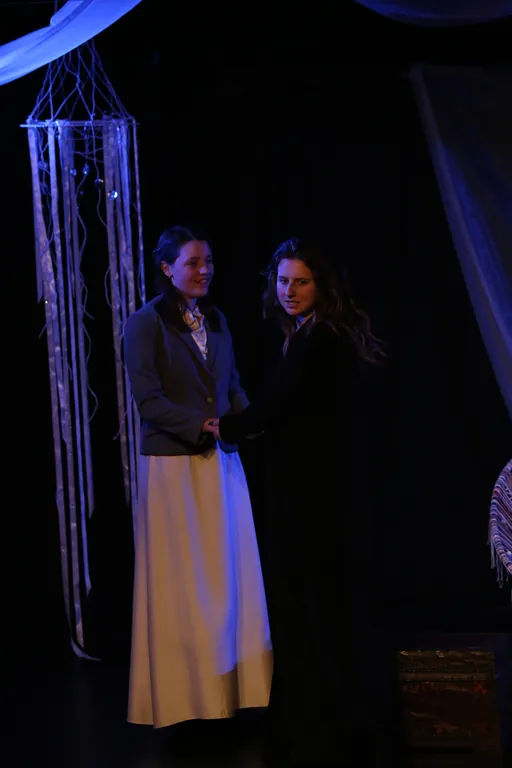
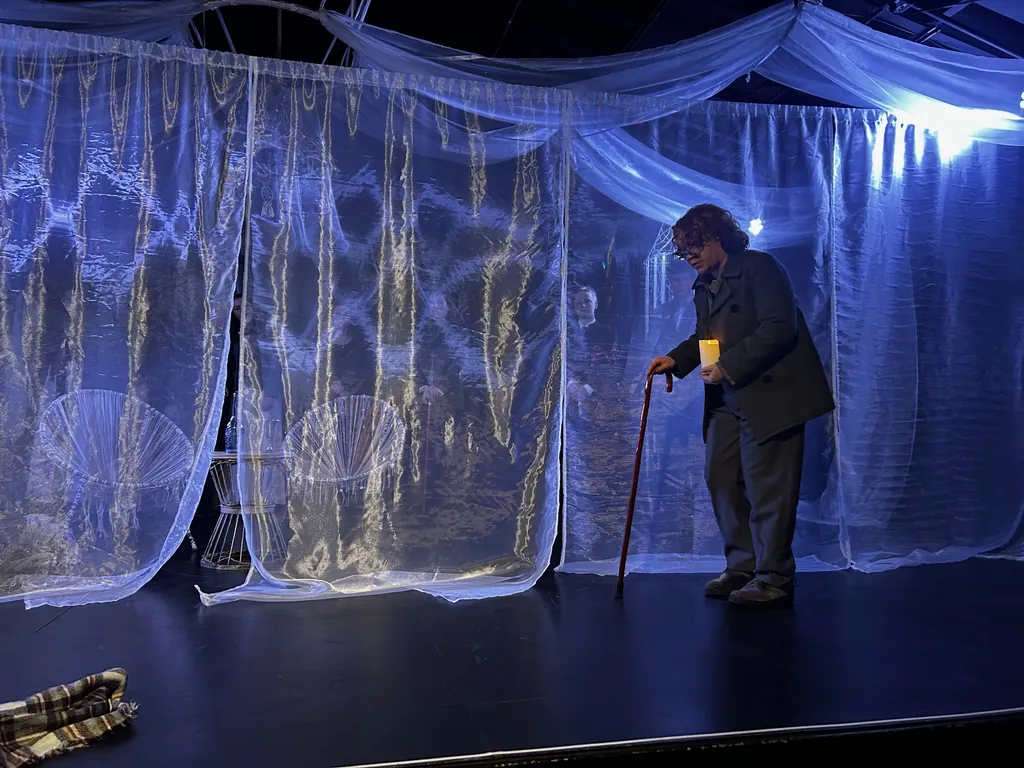
The fourth act is immersed in cold white light, fully revealing what had been quietly present from the very beginning. The transparent organza framing the stage, carrying an almost imperceptible sense of fragility throughout the performance, now transforms into a ghostly presence — exposing the spectral nature of a world that had been slowly disappearing all along.
The fourth act is immersed in cold white light, fully revealing what had been quietly present from the very beginning. The transparent organza framing the stage, carrying an almost imperceptible sense of fragility throughout the performance, now transforms into a ghostly presence — exposing the spectral nature of a world that had been slowly disappearing all along.
46,77
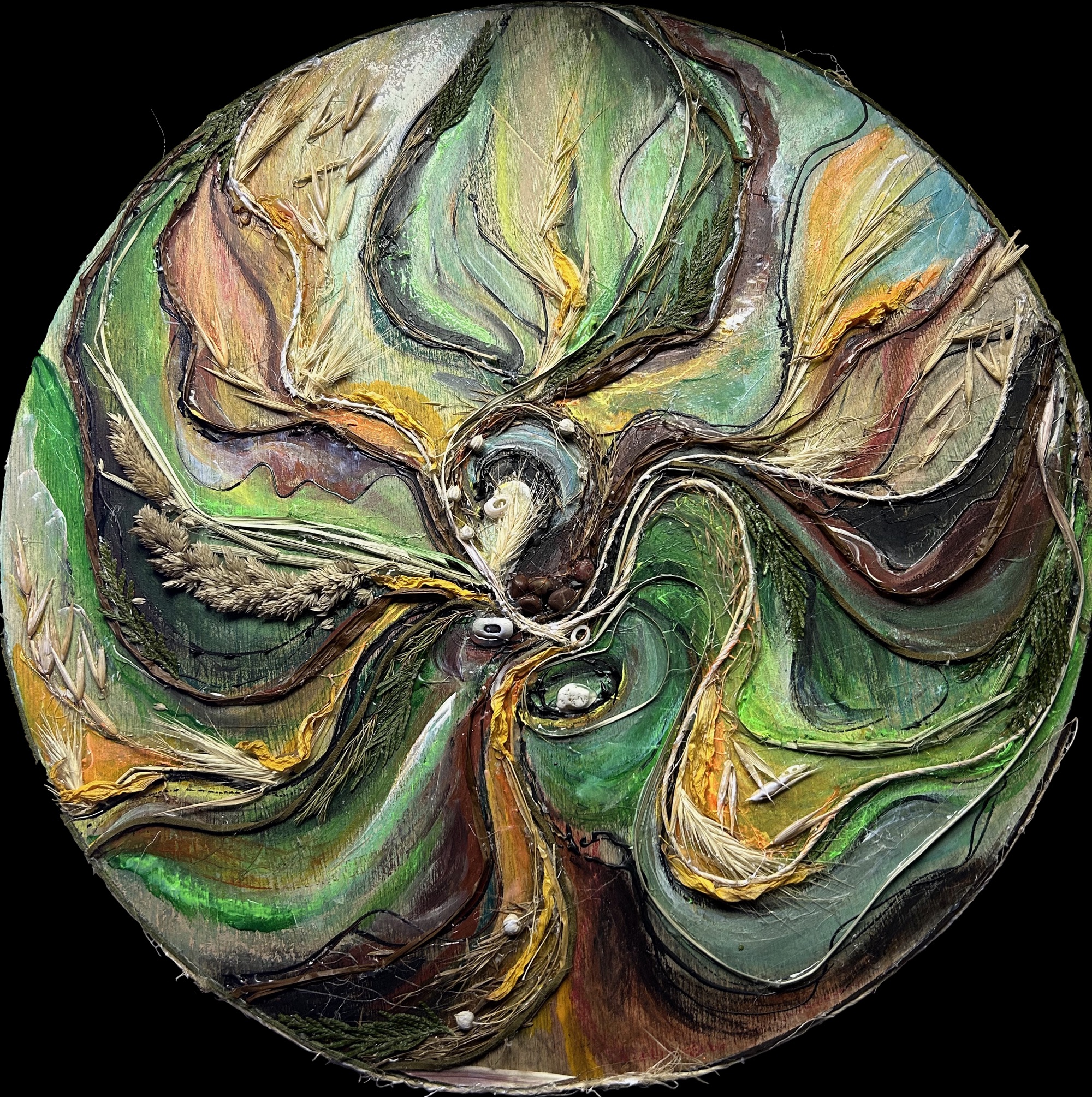
A warm handmade lamp, created from lace, driftwood, and seashells as a tribute to the natural beauty and aesthetic spirit of Santa Cruz, remains the only source of warmth left inside the house — a fragile glow that survives only as long as its inhabitants remain within its walls.
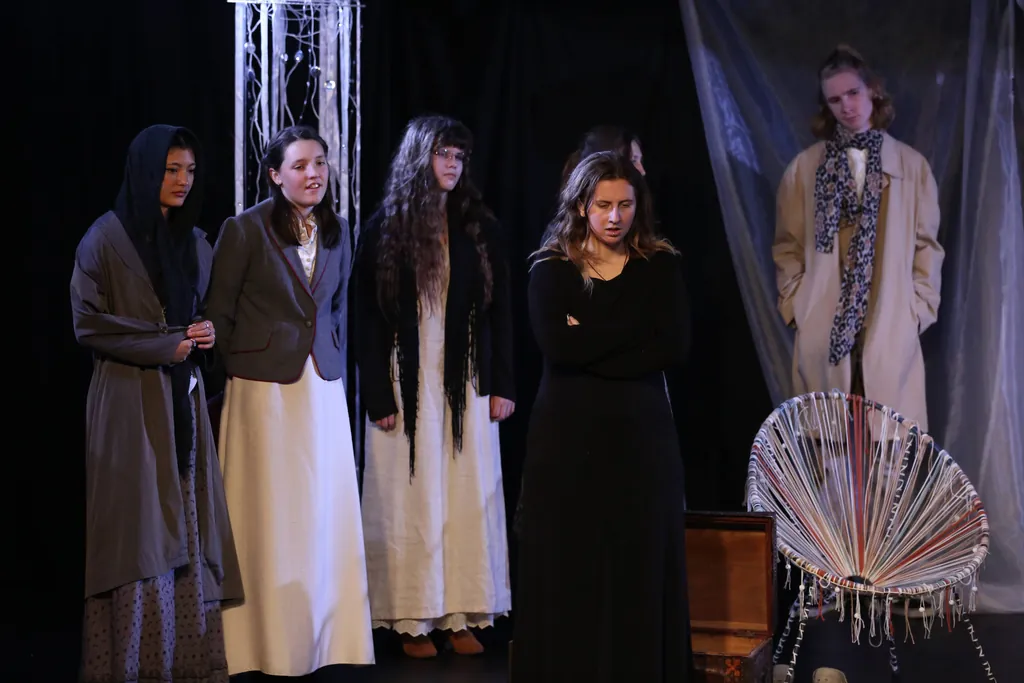
All characters are now dressed in shades of grey, black, and white, reflecting a final transformation: they themselves have already become almost ghostlike figures, lingering in a world that no longer truly belongs to them.
47,48
Charlotte’s final appearance becomes the last mark placed by Chekhov himself.
Writing his final play while already aware that death was approaching, Chekhov lovingly created a world filled with remarkably deep and unforgettable characters — only to shatter their lives completely.
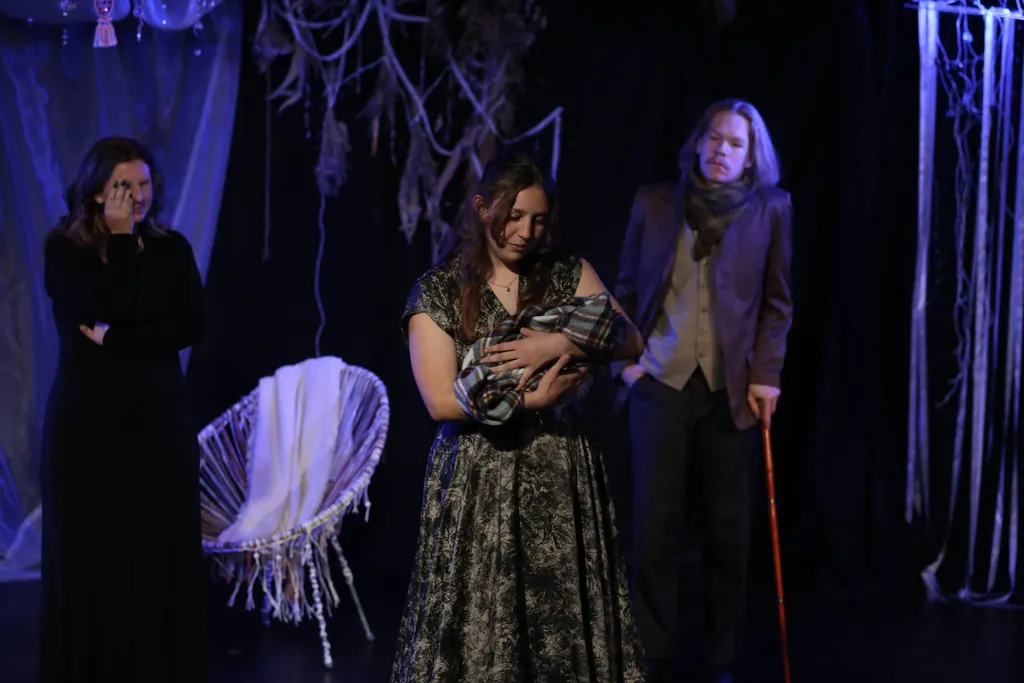
This idea finds its final embodiment in Charlotte, who violently throws an imaginary baby onto the floor while coldly repeating, “Poor baby is crying… what a pity.” In this moment, she ceases to be merely a character and becomes the force that brings the entire world of the play to its inevitable destruction.
49
The final farewell to the house unfolds in complete uncertainty, as no one knows what life beyond this moment will now become.
The final farewell to the house unfolds in complete uncertainty, as no one knows what life beyond this moment will now become.
51
Suspended between loss and an unknown future, each character remains trapped within their own state of shock — isolated, motionless, and drifting through the emotional fog left behind by the collapse of everything that once defined their world
Suspended between loss and an unknown future, each character remains trapped within their own state of shock — isolated, motionless, and drifting through the emotional fog left behind by the collapse of everything that once defined their world
53
As the characters freeze into complete stillness, Charlotte and Yepikhodov slowly draw the transparent organza curtain across the stage, much like furniture being covered with fabric inside an abandoned house.
Remaining suspended behind this translucent veil, the former inhabitants of the estate quietly become part of its past forever — no longer living within the space, but preserved inside it like an old photograph left hanging on the wall.
78
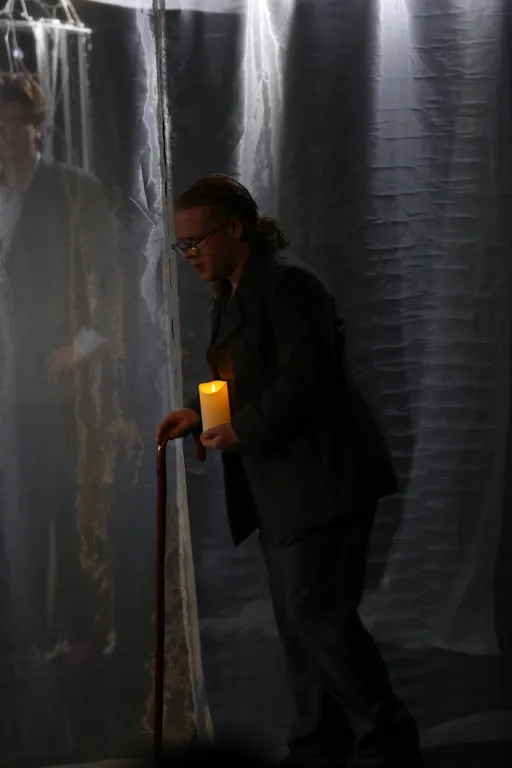
With Dust in the Wind filling the space, Fiers becomes the last living presence left inside a world already erased.
With Dust in the Wind filling the space, Fiers becomes the last living presence left inside a world already erased.
58
Abandoned in the empty house he served all his life, he stands before the transparent organza curtain, behind which the frozen figures of the other characters now exist only as ghostly traces of a life already gone.
As the music reflects:
“I close my eyes
Only for a moment and the moment’s gone
All my dreams
Pass before my eyes with curiosity”
on the unbearable brevity of existence, the final scene becomes Chekhov’s ultimate gesture: a quiet reminder that every world we believe permanent is already disappearing.
55
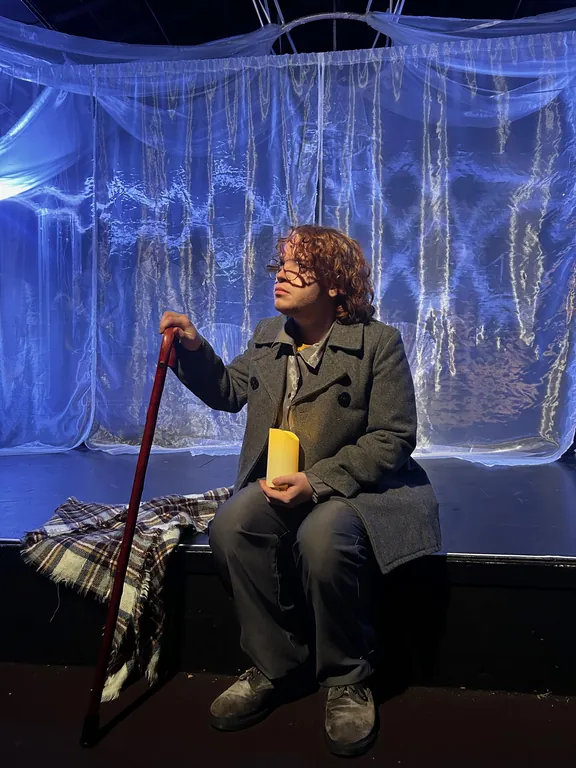
In the final moment, as Dust in the Wind echoes through the space, Fiers slowly lowers himself onto the floor, curling onto his side.
At the words “All we are is dust in the wind,” he places in front of himself a simple cardboard sign reading:
Homeless.
Anything Helps.
In an instant, the image violently tears the audience away from the distant world of Chekhov’s play and returns them to the brutal reality of the present day, forcing a confrontation with a truth that remains painfully unchanged: behind the collapse of every social structure, it is always human vulnerability that is left exposed.